NDSRIs (Nitrosamine Drug Substance–Related Impurities): Regulatory Risk, Analytical Challenges, and Control Strategies

  Nitrosamine Drug Substance–Related Impurities (NDSRIs) have emerged as a critical concern for pharmaceutical manufacturers and regulators worldwide. Unlike simple nitrosamines, NDSRIs are structurally related to the active pharmaceutical ingredient (API) and may form during synthesis, processing, or storage. Because many nitrosamines are classified as probable human carcinogens, regulatory agencies require robust risk assessment, sensitive analytical detection, and effective control strategies. As regulatory scrutiny increases, pharmaceutical companies must adopt science-based approaches to identify, quantify, and mitigate NDSRIs to ensure patient safety and product compliance.

What Are NDSRIs?

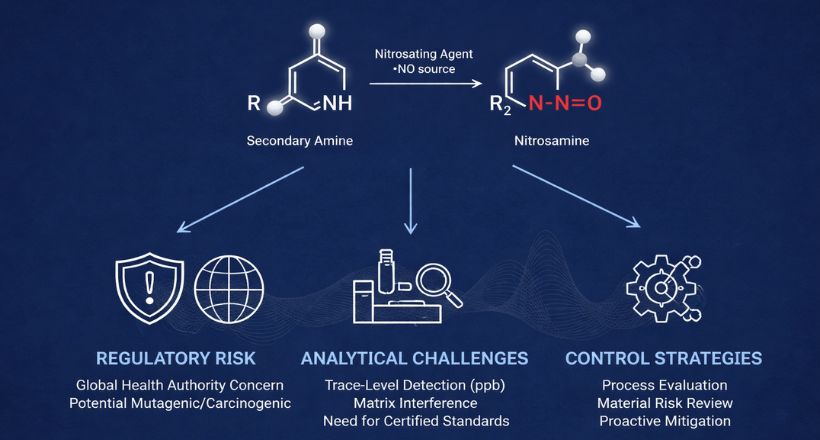
NDSRIs are nitrosamine impurities formed from amine-containing drug substances or intermediates. They typically arise when secondary or tertiary amines react with nitrosating agents such as nitrites under favorable conditions. These impurities are particularly concerning because:
  • they may be structurally similar to the API
  • they can form under routine manufacturing conditions
  • they often occur at trace levels requiring ultra-sensitive detection
Unlike small nitrosamines (e.g., NDMA), NDSRIs may be unique to a specific drug substance, making detection and risk evaluation more complex.

Why Regulators Are Concerned

Global health authorities, including the U.S. Food and Drug Administration, European Medicines Agency, and World Health Organization, require manufacturers to evaluate nitrosamine risks due to their potential mutagenic and carcinogenic properties. Key regulatory expectations include:
  • risk assessment for nitrosamine formation pathways
  • establishment of acceptable intake (AI) limits
  • validated analytical methods capable of detecting trace levels
  • implementation of mitigation and control strategies
The International Council for Harmonisation of Technical Requirements for Pharmaceuticals for Human Use M7 guideline provides a framework for assessing and controlling mutagenic impurities, including nitrosamines.

Formation Pathways of NDSRIs

Understanding formation mechanisms is essential for effective risk mitigation. NDSRIs may form through:
  1. Nitrosation Reactions: Secondary or tertiary amines react with nitrosating agents (e.g., nitrites) under acidic or process-specific conditions.
  2. Raw Material and Reagent Impurities: Nitrite contamination in solvents, reagents, or excipients can trigger nitrosamine formation.
  3. Process Conditions: Factors influencing formation include:
    • low pH environments
    • elevated temperatures
    • prolonged hold times
    • presence of oxidizing agents
  4. Storage and Packaging Interactions: Nitrosamines may form during storage due to degradation pathways or interactions with packaging components.

Analytical Challenges in Detecting NDSRIs

Detecting NDSRIs presents significant analytical complexity due to their structural diversity and trace-level presence.

Key challenges include:

  • detection at parts-per-billion (ppb) or lower levels
  • matrix interference from complex drug formulations
  • need of reference standards for NDSRIs
  • need for structural confirmation

Advanced analytical approaches

Highly sensitive techniques such as LC-MS/MS are commonly employed for screening and quantification. HRMS supports structural elucidation of unknown impurities.

Risk Assessment and Control Strategies

A proactive, science-based approach is essential to control NDSRIs.

Risk assessment steps:

  1. Process evaluation Identify amine sources and potential nitrosating agents.
  2. Material risk review Assess nitrite contamination risks in raw materials and excipients.
  3. Laboratory stress studies Simulate process conditions to evaluate nitrosamine formation potential.
Mitigation strategies:
  • control nitrite levels in materials and water systems
  • adjust process pH and temperature conditions
  • minimize hold times during manufacturing
  • incorporate antioxidants or inhibitors where appropriate
  • implement protective packaging strategies

Importance of Certified Standards and Method Validation

Accurate quantification and regulatory compliance depend on reliable certified standards and fully validated analytical methods. High-quality impurity standards support:
  • method development and validation
  • structural confirmation
  • regulatory submissions
  • routine quality control

How Daicel Chiral Technologies India Supports NDSRI Analysis

Daicel Chiral Technologies India provides advanced analytical solutions to support pharmaceutical companies in addressing nitrosamine and NDSRI challenges.

Capabilities include:

  • development of sensitive LC-MS /MS methods for NDSRI detection
  • impurity identification and structural characterization
  • large inventory of high-purity certified NDSRI standards
  • stable isotope labelled NDSRI standards to mitigate matrix affects
  • risk assessment support aligned with global regulatory expectations
  • method validation and batch testing for regulatory compliance
With deep expertise in synthesis of high quality NDSRI standards, stable isotope labelled NDSRI standards and GMP analytical services, Daicel Chiral Technologies India helps manufacturers ensure safety, compliance, and product quality.

Conclusion

NDSRIs represent a complex and evolving regulatory challenge for pharmaceutical manufacturers. Their potential genotoxicity, carcinogenicity, diverse formation pathways, and analytical detection challenges demand a comprehensive and science-driven approach. By understanding formation risks, implementing robust analytical methods, and applying proactive mitigation strategies, pharmaceutical companies can ensure compliance with global regulatory expectations while safeguarding patient safety. As regulatory scrutiny continues to evolve, partnering with well experienced analytical experts and high quality certified standards provider can significantly strengthen nitrosamine risk management strategies.
Rubber Oligomers in Extractables & Leachables (E&L) Studies

Rubber Oligomers in Extractables & Leachables (E&L) Studies

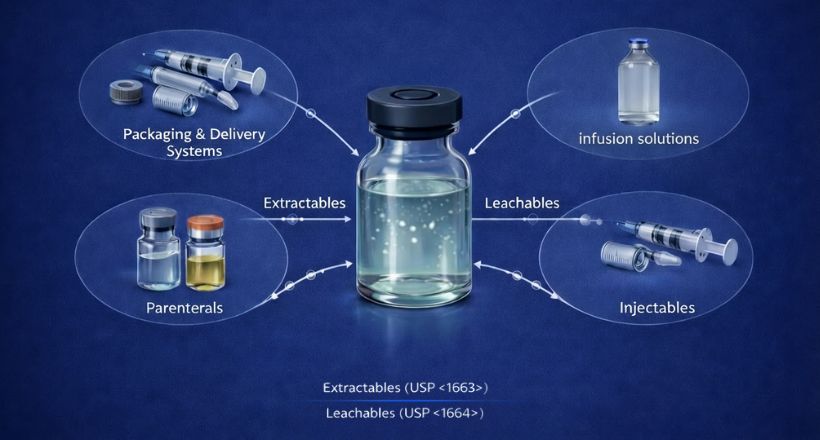
  As regulatory expectations for Extractables & Leachables (E&L) continue to evolve, pharmaceutical and biopharmaceutical manufacturers are under increasing pressure to demonstrate accurate, reproducible, and scientifically justified quantification of leachable compounds. Among the most closely scrutinized substances are rubber oligomers originating from butyl and halobutyl elastomers used in container closure systems such as vial stoppers, syringe plungers, and seals. For parenteral drug products and therapeutic proteins, elastomer-derived leachables are no longer viewed solely as chemical impurities- they are increasingly evaluated as potential contributors to toxicity and immunogenicity risk, making robust E&L programs essential for regulatory compliance and patient safety.

What Are Rubber Oligomers?

Rubber oligomers are low-molecular-weight polymer fragments that originate from elastomeric materials during polymerization, curing, and compounding processes. These species are inherent to elastomer formulations and are commonly associated with butyl and halobutyl rubbers used in pharmaceutical packaging and drug-delivery components. Due to their relatively small molecular size and increased mobility compared to high-molecular-weight polymers, rubber oligomers can migrate from elastomeric components into drug products over time, particularly under conditions of:
  • Long-term storage
  • Elevated temperature
  • Direct contact with liquid formulations
As a result, rubber oligomers are recognized as an important class of extractables and leachables in pharmaceutical and biopharmaceutical products.

Why Rubber Oligomers Matter for Drug Product Safety

From a product-quality and patient-safety perspective, rubber oligomers are significant because they may:
  • Leach into drug products during storage or use
  • Interact chemically with active pharmaceutical ingredients, especially sensitive biologics
  • Contribute to toxicological or immunogenicity risk at sufficient exposure levels
Depending on the elastomer formulation, rubber oligomers may include saturated, unsaturated, or halogenated species. Brominated rubber oligomers (e.g., C₁₃H₂₃Br) are representative examples associated with halobutyl elastomers and have been cited in regulatory discussions on leachables of potential concern.

Regulatory Perspective: Rubber Oligomers and Immunogenicity Risk

The FDA’s Guidance for Industry: Immunogenicity Assessment for Therapeutic Protein Products (2014) explicitly recognizes leachables from container closure systems as potential contributors to enhanced immunogenicity and/or toxicity in biological drug products. Elastomer-derived compounds, including rubber oligomers such as C₁₃H₂₃Br, are representative examples of leachables that may contribute to these effects. For biopharmaceutical products—particularly injectables and long-acting formulations—this elevates rubber oligomers from a packaging concern to a critical component of immunogenicity risk assessment.

Alignment with USP <1663> and <1664>

FDA expectations for biologics intersect closely with pharmacopeial guidance on E&L testing. USP <1663> (Assessment of Extractables) and USP <1664> (Assessment of Drug Product Leachables) emphasize:
  • Comprehensive identification of potential extractables
  • Quantitative evaluation of actual leachables in drug products
  • Exposure-based risk assessment supported by scientifically sound data
For elastomer-derived compounds, this means that tentative identification is no longer sufficient—regulators increasingly expect defensible quantitative data that can be used to assess patient risk.

The Quantification Challenge: Why Rubber Oligomer Standards Are Essential

Analytical techniques such as GC-MS and GC-MS/MS are well suited for detecting rubber oligomers at trace levels. However, accurate quantification requires compound-specific certified standards. Without authentic rubber oligomer standards, laboratories often rely on:
  • Surrogate compounds
  • Estimated response factors
  • Semi-quantitative approaches
These methods introduce uncertainty into:
  • Patient exposure calculations
  • Toxicological and immunogenicity risk assessments
  • Regulatory submissions and justifications
As regulatory scrutiny increases, robust, compound-matched quantification is essential

Daicel Pharma: Integrated Rubber Oligomer E&L Solutions

Daicel Pharma supports pharmaceutical and biopharmaceutical manufacturers through a comprehensive, integrated approach to rubber oligomer assessment.

Rubber Oligomer Certified Standards

  • Developed multiple Rubber Oligomer Standards
  • Structurally characterized and Certified
  • Designed for accurate GC-MS / GC-MS/MS quantification

E&L Study Services Using Rubber Oligomer Standards

  • Extractables and leachables studies that directly incorporate compound-specific standards
  • Improved accuracy, reproducibility, and inter-laboratory consistency
  • Data packages aligned with USP <1663>/<1664> and FDA expectations
By integrating authentic standards directly into E&L study execution, Daicel helps reduce analytical uncertainty and strengthen regulatory confidence.

Why Choose Daicel Pharma?

  • Deep expertise in rubber oligomer chemistry
  • Purpose-built general standards—not general substitutes
  • Integrated analytical and study execution capabilities
  • Focus on quantification, reproducibility, and regulatory confidence

Talk to Our E&L Experts

Whether you need rubber oligomer certified standards or comprehensive E&L studies, Daicel Pharma can support your program. Contact us today to discuss your rubber oligomer E&L study needs

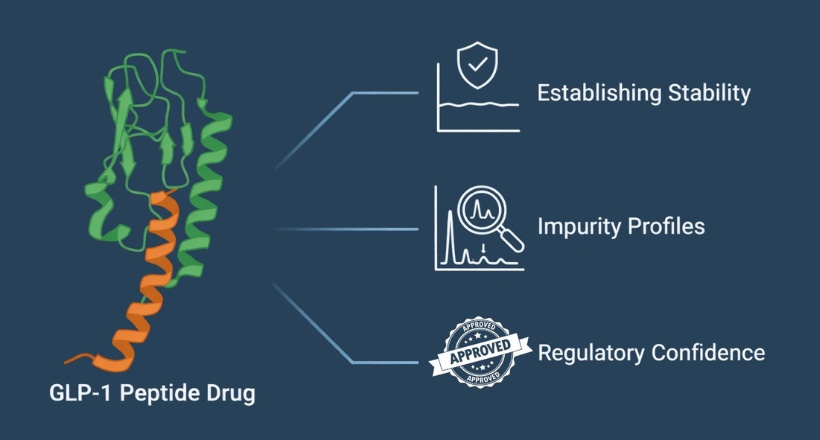
Forced Degradation Studies for GLP-1 Peptide Drugs: Establishing Stability, Impurity Profiles, and Regulatory Confidence

  Forced degradation studies are a critical component of pharmaceutical development for GLP-1 peptide drugs such as Liraglutide, Semaglutide, and Tirzepatide. Unlike real-time stability testing, forced degradation deliberately subjects the drug substance and drug product to extreme conditions to accelerate degradation and reveal potential impurity pathways. Regulatory agencies rely on these studies to evaluate molecular stability, validate analytical methods, and ensure that all clinically relevant impurities have been identified and controlled.

Regulatory Expectations for Forced Degradation Studies

Regulatory agencies expect forced degradation studies to be scientifically justified, comprehensive, and product-specific, rather than generic stress testing exercises. Key expectations include:
  • Degradation pathways relevant to real storage and handling conditions
  • Sufficient degradation (typically 5–20%) without complete destruction of the molecule
  • Identification and characterization of major degradation products
  • Clear linkage between forced degradation results and stability-indicating methods
Forced degradation data directly supports impurity control strategies reviewed during ANDA and NDA submissions. Certified GLP-1 impurity standards enable simpler and more reliable identification and characterization of degradation products.

Common Stress Conditions Applied to GLP-1 Peptide Drugs

Due to their peptide backbone and sensitive amino acid residues, GLP-1 drugs are subjected to multiple orthogonal stress conditions.
  1. Hydrolytic Stress: Exposure to acidic, and alkaline conditions accelerates peptide bond cleavage. Hydrolysis often results in truncated peptides and fragment impurities, particularly at labile peptide bonds.
  2. Oxidative Stress: Oxidative conditions (e.g., hydrogen peroxide exposure) target residues such as tryptophan, tyrosine, methionine, and histidine. Oxidation leads to impurities like Trp(O), kynurenine, and related species, which are commonly observed in GLP-1 peptides.
  3. Thermal Stress: Elevated temperatures accelerate both hydrolysis and oxidation, often revealing aggregation tendencies and cyclic degradation products.
  4. Photolytic Stress: Light exposure induces photodegradation, particularly affecting aromatic amino acids. This stress is critical for injectable formulations exposed to ambient light during handling.
  5. Solid-State Stress (for Drug Substance): Moisture, heat, and light stress applied to solid peptide material help assess degradation risks during manufacturing, storage, and transport.

Impurity Generation and Identification Through Forced Degradation

Forced degradation enables the intentional generation of degradation-related impurities that may not be observed in early stability studies. These impurities are then:
  • Separated using high-resolution HPLC or UPLC
  • Identified by accurate mass measurement via HRMS
  • Structurally confirmed through amino acid sequencing by HRMS, NMR, or complementary techniques
This process ensures that degradation products observed during long-term stability are already understood, characterized, and controlled.

Role of Forced Degradation in Stability-Indicating Method Validation

One of the most critical outcomes of forced degradation studies is the demonstration that analytical methods are stability-indicating. A valid stability-indicating method must:
  • Resolve the main peptide from all degradation products
  • Detect impurities at low regulatory thresholds
  • Accurately quantify impurities even in stressed samples
Forced degradation samples are therefore essential during method development and validation for GLP-1 peptide drugs.

Linking Forced Degradation to Lifecycle Impurity Control

Stability studies are particularly important for immunogenicity evaluation, as certain impurities may not be present at release but can emerge over shelf life. Oxidative species, deamidated variants, and cyclic degradation products often increase under accelerated or stressed conditions. Monitoring impurity evolution during stability testing helps ensure that immunogenic risk does not increase over time, especially for long-term therapies like GLP-1 analogs. Data generated from forced degradation studies informs:
  • Selection of stability-indicating impurities
  • Justification of impurity limits
  • Identification of impurities requiring reference standards
  • Long-term stability monitoring strategies
This linkage ensures that impurity control remains proactive rather than reactive throughout the product lifecycle.

Importance of Reference Standards in Forced Degradation Studies

While forced degradation generates impurities, certified impurity reference standards are essential for accurate quantification and regulatory defensibility. These standards allow:
  • Confirmation of impurity identity
  • Validation of analytical methods
  • Reliable comparison with RLD impurity profiles
  • Consistent monitoring across development stages
Without certified standards, forced degradation data remains qualitative and insufficient for regulatory decision-making.

Daicel Pharma Standards’ Role

Daicel Pharma Standards provides a wide range of fully characterized GLP-1 peptide impurity standards, including degradation-related impurities commonly generated during forced degradation studies. These standards support pharmaceutical companies in translating forced degradation data into robust analytical control strategies and regulator-ready submissions.

Conclusion

Forced degradation studies are not merely a regulatory checkbox for GLP-1 peptide drugs, they are foundational to understanding molecular stability, impurity formation, and long-term product safety. When combined with advanced analytical methods and certified impurity standards, forced degradation enables a scientifically sound and regulator-aligned approach to GLP-1 peptide development.
GLP-1 Peptide Drug Impurities

Immunogenicity Risk Assessment of GLP-1 Peptide Drug Impurities: Regulatory and Analytical Perspectives

  GLP-1 peptide therapeutics such as Liraglutide, Semaglutide, and Tirzepatide are administered chronically and often at high cumulative doses, making immunogenicity risk a critical consideration during development and regulatory review. While the active drug substance is carefully optimized to minimize immune responses, peptide-related impurities may significantly alter immunogenic potential, even when present at low levels. This blog examines how impurities in GLP-1 peptide drugs contribute to immunogenicity risk, and how regulatory frameworks and analytical strategies are designed to mitigate this risk.

Why Immunogenicity Matters for GLP-1 Peptide Drugs

Peptide-based therapeutics inherently carry a higher immunogenic risk than small molecules due to their size, sequence complexity, and structural similarity to endogenous proteins. For GLP-1 analogs, repeated administration increases the likelihood that the immune system may recognize structural variants or modified peptides as foreign. Potential clinical consequences include:
      • Development of anti-drug antibodies (ADAs)
      • Reduced therapeutic efficacy
      • Altered pharmacokinetics
      • Injection-site reactions or systemic hypersensitivity
Regulators therefore place strong emphasis on impurity profiles that could increase immunogenic potential beyond that of the Reference Listed Drug (RLD) 

Impurity Attributes That Increase Immunogenic Risk

Not all impurities pose equal immunogenic concern. Risk is influenced by structure, novelty, and exposure
  1. Sequence Variants and Truncated Peptides Deletion, insertion, and truncated impurities introduce new peptide termini or altered epitopes. These changes may expose sequences not present in the native GLP-1 analog, increasing the likelihood of immune recognition.
  2. D-Amino Acid and Isomeric Impurities Racemization during synthesis can produce D-amino acid–containing peptides. As these are not typically present in human proteins, they may increase the probability of immune recognition.
  3. Oxidative and Deamidated Impurities Oxidation or deamidation can subtly change peptide conformation, potentially altering antigen processing and presentation pathways.
  4. Aldehyde and Excipient Adducts Drug product–related impurities such as formaldehyde or acetaldehyde adducts introduce non-native chemical groups, which are well-recognized immunogenic triggers.

Regulatory Expectations for Immunogenicity Control

During ANDA review of peptide drugs, regulatory agencies evaluate impurity-related immunogenic risk using a comparability-based and risk driven approach:
  • Impurities present in the RLD at similar levels are generally acceptable.
  • New impurities absent in the RLD are expected to be at ≤0.1% and may require additional scientific justification based on structure and exposure.
  • Unknown impurities must be controlled at ≤0.1% in every batch.
  • Immunogenicity risk should be justified using structural, analytical, and comparative data rather than clinical assumptions alone.
As a result, analytical characterization plays a central role in regulatory decision-making.

Role of Analytical Characterization in Immunogenicity Assessment

Comprehensive impurity characterization directly supports immunogenicity risk evaluation by enabling: Structural Confirmation High-resolution mass spectrometry (HRMS) and amino acid sequencing identify whether an impurity introduces new epitopes or altered peptide backbones. Purity and Potency Determination Accurate potency assignment ensures that impurity levels are not underestimated due to residual salts, solvents, or counter ions. Comparability to RLD Profiles Orthogonal chromatographic and HRMS data allow side-by-side comparison of impurity profiles between generic and innovator products. Without fully characterized impurity standards, immunogenicity risk assessments remain incomplete and vulnerable to regulatory challenge.

Stability-Induced Immunogenic Risk

Stability studies are particularly important for immunogenicity evaluation, as certain impurities may not be present at release but can emerge over shelf life. Oxidative species, deamidated variants, and cyclic degradation products often increase under accelerated or stressed conditions. Monitoring impurity evolution during stability testing helps ensure that immunogenic risk does not increase over time, especially for long-term therapies like GLP-1 analogs.

Importance of Certified Impurity Standards

Certified GLP-1 impurity standards enable:
  • Accurate quantification of low-level immunogenic impurities
  • Validation of sensitive analytical methods
  • Reliable stability trend analysis
  • Strong scientific justification in regulatory submissions
These standards help bridge analytical with immunogenicity risk assessment. 

Daicel Pharma Standards’ Contribution

Daicel Pharma Standards provides an extensive portfolio of fully characterized GLP-1 peptide impurity standards, including sequence variants, oxidative species, deamidated forms, truncated peptides, and drug product–related adducts. By supporting precise impurity identification and quantification, these standards help pharmaceutical developers proactively assess and control immunogenicity risk throughout the GLP-1 product lifecycle.

Conclusion

Immunogenicity risk in GLP-1 peptide therapeutics is closely linked to impurity structure, origin, and evolution over time. Regulatory agencies expect manufacturers to demonstrate not only low impurity levels, but also a deep understanding of how those impurities may affect patient safety. A scientifically rigorous impurity characterization and control strategy supported by certified impurity standards remains essential for minimizing immunogenic risk and ensuring long-term success of GLP-1 peptide drugs.

Degradation Pathways and Impurity Formation in GLP-1 therapeutics: Liraglutide, Semaglutide, and Tirzepatide

  GLP-1 peptide drug therapeutics have revolutionized the treatment of type 2 diabetes and obesity due to their ability to regulate blood glucose levels by promoting insulin secretion, inhibiting glucagon release, and delaying gastric emptying. Critical structural modifications, such as C-terminal amidation and the presence of histidine at position 7, enhance their therapeutic efficacy and extend their half-life. Among these analogs, Liraglutide, Semaglutide, and Tirzepatide are prominent examples. However, understanding their degradation pathways and impurity formation is essential for ensuring their safety, efficacy, and stability.

Overview of GLP-1 peptide drugs:

  1. Liraglutide: A daily injectable GLP-1 analog engineered to resist DPP-4 degradation. Its fatty acid modification enhances albumin binding, prolonging its half-life and improving therapeutic outcomes.
  2. Semaglutide: Offered in both injectable and oral forms, Semaglutide boasts greater potency and a much longer half-life (~170 hours) than Liraglutide, making it a favored choice for weight management.
  3. Tirzepatide: This dual agonist of GLP-1 and GIP delivers superior glycemic control and weight reduction, setting it apart as the latest innovation in this drug class.

Degradation Pathways of GLP-1 peptide drugs:

GLP-1 peptide drugs are vulnerable to degradation, leading to impurity formation that affects their safety, efficacy, and immunogenicity.
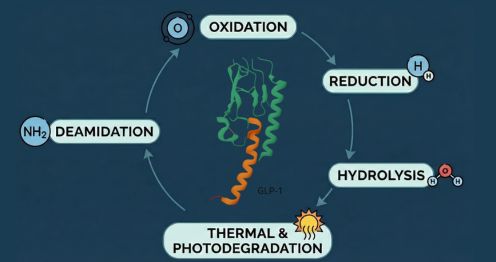
  1. Hydrolysis: Peptide bonds degrade in aqueous conditions, producing inactive fragments. Factors like pH, temperature, and ionic content influence hydrolysis rates.
  2. Oxidation: Residues such as tryptophan, tyrosine, and histidine are prone to oxidation, forming impurities that may elicit immune responses. Environmental factors like air, light, and pro-oxidant excipients exacerbate this process.
  3. Thermal Degradation: Heat accelerates hydrolysis and oxidation, leading to peptide aggregation and truncated sequences that undermine drug performance.
  4. Photodegradation: Exposure to light triggers structural damage to peptides. Proper storage minimizes this risk.
  5. Deamidation: Asparagine and glutamine residues undergo deamidation, creating acidic variants that alter stability and pharmacokinetics.

Impurity Formation in GLP-1 peptide drugs

Liraglutide: Liraglutide, a 31-amino acid peptide, is prone to degradation and impurity formation due to its structural features. It contains glycine and aspartic acid residues, along with vulnerable peptide bonds, making it susceptible to bond cleavage and hydrolysis. Glutamine can undergo deamidation, while aspartic acid may isomerize to isoaspartic acid, affecting stability. The tryptophan residue is at risk of oxidative degradation, forming impurities like kynurenine under photodegradation conditions. Tyrosine and histidine are also prone to oxidation. Thermal degradation can cleave amide bonds, producing shorter peptides like 2,5-diketopiperazines. Additionally, aldehyde reagents used in formulation increase the risk of impurity formation. Examples of impurities: [1-28]-Liraglutide, [3-31]-Liraglutide, [4-31]-Liraglutide, [5-31]-Liraglutide, (6-31)-Liraglutide, [7-31]-Liraglutide, (9-31)-Liraglutide, [10-31]-Liraglutide, [11-31]-Liraglutide, [12-31]-Liraglutide, [14-31]-Liraglutide, Linear Liraglutide, Iso-Asp-Liraglutide, Trp(O)-Liraglutide, Kyn(25)-Liraglutide , Glu(17)-Liraglutide, Formaldehyde adduct-Liraglutide, Acetaldehyde-Adduct-Liraglutide, Propionaldehyde adduct-Liraglutide. Semaglutide: Structurally similar to Liraglutide, Semaglutide incorporates α-aminoisobutyric acid (Aib) and has a longer linker at Lys20. The degradation pathways for Semaglutide mirror those of Liraglutide, but its structural modifications enhance stability. Examples of impurities: [1-29]-Semaglutide, [3-31]-Semaglutide, [4-31]-Semaglutide, [5-31]-Semaglutide, [9-31]-Semaglutide, [12-31]-Semaglutide, [14-31]-Semaglutide, Linear Semaglutide, Glu(17)-Semaglutide, γ-Glu(3)-Semaglutide, γ-Glu(15)-Semaglutide, Iso-Asp-Semaglutide, Acetaldehyde adduct-Semaglutide Tirzepatide: With a larger backbone of 39 amino acids and a dual agonistic mechanism, Tirzepatide shares similar degradation pathways with Liraglutide and Semaglutide. Its unique sequence introduces additional proline residues, reducing susceptibility to specific degradation reactions. Examples of impurities: [1-31]-Tirzepatide, Tirzepatide Acid, Glu(19)-Tirzepatide, Glu(24)-Tirzepatide, [β-Asp-9, β-Asp-15]-Tirzepatide, Endo-Pro(38)-Tirzepatide, [Des-AEEA4']-Tirzepatide, [Endo-AEEA4']-Tirzepatide, [D-Ser8]-Tirzepatide, [D-Ser32]-Tirzepatide, [Kyn25]-Tirzepatide, Trp(O)-Tirzepatide, Cycli-Tyr-Tirepatide

Daicel Pharma Standards Contribution

Daicel Pharma Standards provides a comprehensive portfolio of fully characterized GLP-1 peptide drug impurity standards, including degradation-related impurities for Liraglutide, Semaglutide, and Tirzepatide. These standards play a critical role in method development, regulatory submissions, and stability studies, strengthening Daicel Pharma Standards’ position as a trusted partner in accelerating peptide drug development. By enabling precise and accurate impurity assessment, Daicel Pharma Standards supports the pharmaceutical industry’s efforts to advance safe, effective, and innovative GLP-1 peptide drugs for the management of diabetes and obesity. Daicel Pharma Standards stock list of GLP-1 peptide drug impurities:
S. No. Liraglutide Semaglutide Tirzepatide
isomeric impurities isomeric impurities isomeric impurities
1 D-His(1)-Liraglutide D-His(1)-Semaglutide D-Tyr(1)-Tirzepatide
2 D-Glu(3)-Liraglutide D-Glu(3)-Semaglutide [D-Glu-3]-Tirzepatide
3 D-Thr(5)-Liraglutide D-Thr(5)-Semaglutide [D-Phe6]-Tirzepatide
4 D-allo-Thr(5)-Liraglutide D-Allo-Thr(5)-Semaglutide [D-Ser8]-Tirzepatide
5 D-Thr(7)-Liraglutide D-Phe(6)-Semaglutide [D-Asp9]-Tirzepatide
6 D-allo-Thr(7)-Liraglutide D-Ser(8)-Semaglutide [D-Ser11]-Tirzepatide
7 D-Ser(8)-Liraglutide D-Asp(9)-Semaglutide [D-Leu14]-Tirzepatide
8 D-Asp(9)-Liraglutide D-Iso-Asp(9)-Semaglutide [D-Asp15]-Tirzepatide
9 D-Val(10)-Liraglutide D-Val(10)-Semaglutide [D-Gln19]-Tirzepatide
10 D-Ser(11)-Liraglutide D-Ser(11)-Semaglutide [D-γ-Glu-Side chain]-Tirzepatide
11 D-Ser(12)-Liraglutide D-Ser(12)-Semaglutide [D-Phe22]-Tirzepatide
12 D-Leu(14)-Liraglutide D-Leu(14)-Semaglutide [D-Gln24]-Tirzepatide
13 D-Glu(15)-Liraglutide D-Glu(15)-Semaglutide D-Leu(26)-Tirzepatide
14 D-Gln(17)-Liraglutide D-Ala(19)-Semaglutide D-Ser(32)-Tirzepatide
15 D-Ala(18)-Liraglutide D-γ-Glu(side chain)-Semaglutide D-Ser(33)-Tirzepatide
16 D-γ-Glu(side chain)-Liraglutide D-Glu(21)-Semaglutide
17 D-Glu(21)-Liraglutide D-Phe(22)-Semaglutide
18 D-Phe(22)-Liraglutide D-Ile(23)-Semaglutide
19 D-Ile(23)-Liraglutide D-Ala(24)-Semaglutide
20 D-Ala(24)-Liraglutide D-Trp(25)-Semaglutide
21 D-Trp(25)-Liraglutide D-Leu(26)-Semaglutide
22 D-Leu(26)-Liraglutide D-Arg(30)-Semaglutide
23 D-Arg(28)-Liraglutide
24 D-Arg(30)-Liraglutide
truncated impurities truncated impurities truncated impurities
25 [3-31]-Liraglutide [3-31]-Semaglutide Des-Tyr(1),Aib(2)-Tirzepatide
26 [4-31]-Liraglutide [4-31]-Semaglutide Fragment (1-20)-Tirzepatide
27 [5-31]-Liraglutide [5-31]-Semaglutide Fragment (1-21)-Tirzepatide
28 (6-31)-Liraglutide [7-31]-Semaglutide Fragment (1-24)-Tirzepatide
29 [7-31]-Liraglutide [8-31]-Semaglutide Fragment (1-25)-Tirzepatide
30 [8-31]-Liraglutide [9-31]-Semaglutide Fragment (1-26)-Tirzepatide
31 (9-31)-Liraglutide [10-31]-Semaglutide Fragment (1-28)-Tirzepatide
32 [10-31]-Liraglutide [12-31]-Semaglutide Fragment (1-32)-Tirzepatide
33 [11-31]-Liraglutide [14-31]-Semaglutide Fragment (3-39)-Tirzepatide
34 [12-31]-Liraglutide [1-29]-Semaglutide Fragment (4-39)-Tirzepatide
35 [14-31]-Liraglutide Des(3-6)-Semaglutide Fragment (5-39)-Tirzepatide
36 [1-28]-Liraglutide Des(3-7)-Semaglutide Fragment (6-39)-Tirzepatide
37 fragment (21-28) Ile-Liraglutide Des(3-8)-Semaglutide Fragment (7-39)-Tirzepatide
38 fragment (21-28) Leu-Liraglutide Fragment (8-39)-Tirzepatide
39 Fragment (9-39)-Tirzepatide
40 Fragment (10-39)-Tirzepatide
deletion impurities deletion impurities deletion impurities
41 Asn(12)-Linear Liraglutide Linear Semaglutide Des-Tyr(1)-Tirzepatide
42 Asn(11)-Linear Liraglutide Des-His(1)-Semaglutide [Des-Aib2]-Tirzepatide
43 Asn(8)-Linear Liraglutide Des-Aib(2)-Semaglutide Des-Gly(4)-Tirzepatide
44 Thr(8)-Linear Liraglutide Des-Glu(3)-Semaglutide Des-Thr(5)-Tirzepatide
45 Glu(9)-Linear Liraglutide Des-Gly(4)-Semaglutide Des-Ile(12)-Tirzepatide
46 Thr(12)-Linear Liraglutide Des-Thr(5)-Semaglutide Des-Aib(13)-Tirzepatide
47 Thr(11)-Linear Liraglutide Des-Thr(7)-Semaglutide [Des-Ile17]-Tirzepatide
48 Des-His(1)-Liraglutide Des-Ser(8)-Semaglutide Des-ϒ-Glu Tirzepatide
49 Des-Ala(2)-Liraglutide Des-Tyr(13)-Semaglutide Des-AEEA-Tirzepatide
50 Des-Gly(4)-Liraglutide Des-Gly(29)-Semaglutide Des-Gly(30)-Tirzepatide
51 Des-Thr(5)-Liraglutide Des-Gly(31)-Semaglutide Des-Pro(31)-Tirzepatide
52 Des-Thr(7)-Lira Des-AEEA-Semaglutide Des-Gly(34)-Tirzepatide
53 Des-Ser(8)-Liraglutide Des-Pro(38)-Tirzepatide
54 Des-Gly(29)-Liraglutide
55 Des-Gly(31)-Liraglutide
Oxidative impurities Oxidative impurities Oxidative impurities
56 Trp(O)-Liraglutide Trp(5-OH)-Semaglutide Trp(5-OH)-Tirzepatide
57 Trp(5-OH)-Liraglutide Trp(2-Oxo)-Semaglutide Trp(O)25-Tirzepatide
58 Kyn(25)-Liraglutide Kyn(25)-Semaglutide Kyn(25)-TirzepatideLiraglutide
59 NFK-Tirzepatide
Process related impurities Process related impurities Process related impurities
60 N-Ac-Liraglutide N-Ac-Semaglutide [β-Asp9]-Tirzepatide
61 N-Ac-D-His-Liraglutide Me-His-Semaglutide [β-Asp15]-Tirzepatide
62 Iso-Asp-Liraglutide γ-Glu(3)-Semaglutide [β-Asp-9, β-Asp-15]-Tirzepatide
63 α-Glu(side Chain)-Liraglutide Iso-Asp-Semaglutide [β-Ala18]-Tirzepatide
64 Trp(4-hydroxy benzyl)25-Liraglutide γ-Glu(15)-Semaglutide [β-Ala21]-Tirzepatide
65 Trp(Ac)-Liraglutide Pyro-glu-17-Semaglutide [β-Ala28]-Tirzepatide
66 Trp(tBu)25-Liraglutide α-Glu(side chain)-Semaglutide [β-Ala-35]-Tirzepatide
67 Trp(4-hydroxybenzyl)25-Semaglutide
68 Trp(tBu)25-Semagltuide
Insertion impurities Insertion impurities Insertion impurities
69 Endo-Thr(7)-Lira Endo-Aib(2)-Semaglutide Endo-Gly(4a)-Tirzepatide
70 Endo-Ala(18)-Liraglutide Endo-Glu(3)-Semaglutide Endo-Thr(5)-Tirzepatide
71 D-His(1)-Endo-Ala(18)-Liraglutide Endo-Gly(4)-Semaglutide Endo-AEEA-Tirzepatide
72 Endo-Ala(24)-Liraglutide Endo-Thr(5)-Semaglutide Endo-Tyr(4'a)-Tirzepatide
73 Endo-Gly(31)-Liraglutide Endo-Tyr(13)-Semaglutide Endo-Gly(30a, 30b)-Tirzepatide
74 Endo-Gly(16)-Semaglutide Endo-Pro(31)-Tirzepatide
75 Endo-Gln(17)-Semaglutide Endo-Ala(35)-Tirzepatide
76 Endo-Ala(19)-Semaglutide Endo-Pro(38)-Tirzepatide
77 Endo-AEEA-Semaglutide Endo-Ser(39)-Tirzepatide
78 Endo-Ile(23)-Semaglutide
79 Endo-Ala(24)-Semaglutide
80 Endo-Leu(26)-Semaglutide
81 Endo-Gly(31)-Semaglutide
Deamidated impurities Deamidated impurities Deamidated impurities
82 Glu(17)-Liraglutide Glu(17)-Semaglutide Glu(19)-Tirzepatide
83 D-Glu(17)-Liraglutide Glu(24)-Tirzepatide
84 Tirzepatide Acid
Drug product impurities Drug product impurities Drug product impurities
85 Formaldehyde adduct-Liraglutide His-Cyclic-Semaglutide Cyclic-Tyr-Tirzepatide
86 Acetaldehyde-Adduct-Liraglutide Acetaldehyde adduct-Semaglutide
87 Propionaldehyde adduct-Liraglutide

Certification of GLP-1 Peptide Drug Impurities

  Purity is one of the most critical quality attributes (CQAs) for synthetic peptides. When reviewing an Abbreviated New Drug Application (ANDA), the FDA evaluates the types and levels of impurities present in a proposed generic drug compared to its Reference Listed Drug (RLD). This blog explores the characterization of GLP-1 peptide impurities, highlighting key strategies and methodologies.

Regulatory Considerations for Peptide Drug Impurities

The impurity control strategy for synthetic peptides is classified into the following key regulatory requirements:
  1. A generic synthetic peptide should not contain impurities at levels exceeding those found in the RLD.
  2. If a new impurity is detected in the generic peptide but absent in the RLD, its level should be controlled at no more than 0.5%. Additionally, a qualification study is required to assess potential immunogenicity risks. If no significant immunogenicity risk is observed, the impurity can be controlled at ≤0.5% by testing each batch.
  3. Any unknown impurity that is not present in the RLD must be controlled at ≤0.1% in every batch.
Robust analytical techniques, including UPLC, HPLC, and orthogonal methods such as UPLC-HRMS, are crucial for detecting and quantifying impurities in GLP-1 peptides. Certified impurity standards play a vital role in quantifying impurity levels, ensuring batch-to-batch consistency, and supporting analytical method validation. 

Certification of Peptide Drug Impurities: Qualitative vs Quantitative aspects

  • Qualitative Characterization identifies the structural composition of impurities. The qualitative characterization of GLP-1 peptide impurities involves HRMS and ¹H NMR. Since GLP-1 peptide impurities generally contain 30–40 amino acids, HRMS analysis is required to confirm their amino acid sequences and distinguish closely related variants. Amino acid composition analysis further establishes the number and types of amino acids present in the impurity, confirming its overall sequence characteristics. Elemental analysis, particularly nitrogen determination, provides additional insight into the total peptide content within the impurity sample.
  • Quantitative Characterization determines impurity concentration, requiring potency evaluation along with structural confirmation. To determine peptide impurity potency, all impurity sources including organic, inorganic, counter ions and residual solvent content must be considered. The general potency calculation formula for peptide impurities is:
          Potency (%) = 100 – [Total Organic Impurities + Inorganic Impurities + counter ions +LOD].

Key Analytical Parameters for Certifying Peptide Drug Impurities

S. No. Quantitative Characterization
1 Description
2 Solubility
3 Identification by Mass spectrometry (Monoisotopic mass)
4 Amino Acid Sequence by HRMS
5 Identification by 1H NMR
6 Identification by FT-IR
7 Amino Acid Composition
8 Peptide Content by Elemental analysis (N determination (%)
9 Purity by HPLC (% Area)
10 Acetate Content by HPLC as is basis (% w/w)
11 TFA Content by HPLC as is basis (% w/w)
12 Loss on drying (LOD) by TGA (%w/w)
13 Potency (%w/w)

Conclusion

The characterization of GLP-1 peptide impurities requires a robust analytical strategy to ensure product safety, efficacy, and regulatory compliance. Identifying, synthesizing, and thoroughly characterizing these impurities are critical for effective impurity control in peptide-based therapeutics.
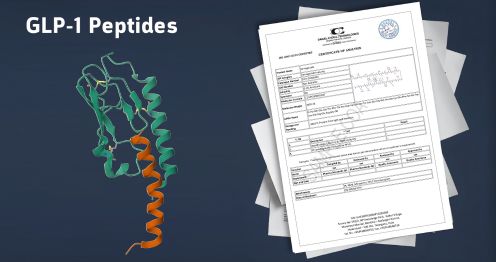
Daicel Chiral Technologies India (DCTI) has developed, fully characterized and certified over 600 peptide impurities, including 200+ specific to GLP-1 peptide drugs such as Liraglutide, Semaglutide and Tirzepatide, to support the pharmaceutical industry's regulatory and quality control requirements. Each impurity is provided with a comprehensive Certificate of Analysis (CoA) and detailed structural characterization reports.
DCTI remains dedicated to delivering analytical and functional characterization of peptide drug substances and peptide drug products, ensuring regulatory compliance to accelerate peptide drug development.
Cyclic Peptide Drugs

Importance of Cyclic Peptides and Role of Impurities

  In a world of changing lifestyles and new disease discoveries, peptide drugs provide a ray of hope for people. Peptide drugs are biologically active and less toxic than other drugs. They have wide therapeutic use, for instance, in oncology, cardiovascular, diabetic, bone diseases, etc. However, due to their high molecular weight and physiochemical characteristics, the synthesis of peptide drugs is complex. It leads to the formation of by-products and other impurities that may affect the drug's safety. Here, we will discuss cyclic peptide drugs and their impurity profiling. This blog is the second in the Peptide series. Let’s first discuss-

Cyclic Peptide Drugs and Their Importance

Cyclic peptides are a class of molecules that have garnered significant attention in drug development due to their unique properties, including high stability, target specificity, enhanced potency, and cell permeability. Cyclic peptides are polypeptide chains taking cyclic ring structure consisting of 5-14 amino acids with a molecular weight of about 500 to 2000 Da. The ring structure can be formed by linking one end of the peptide and the other with an amide bond, or other chemically stable bonds such as lactone, ether, thioether, disulfide, and so on.

Peptide sequence cyclization helps to bind more efficiently with their respective receptors. The cyclic structure of peptides provides a large surface area for interaction with the targeted site. Cyclic peptide drugs are impervious to enzymatic hydrolysis as they don't have free amino and carboxyl ends, thus improving their stability. Usually, cyclic peptides show better biological activity compared to their linear counterparts due to the conformational structure, therefore allowing the enhanced binding toward target molecules or the selectivity by the receptor.

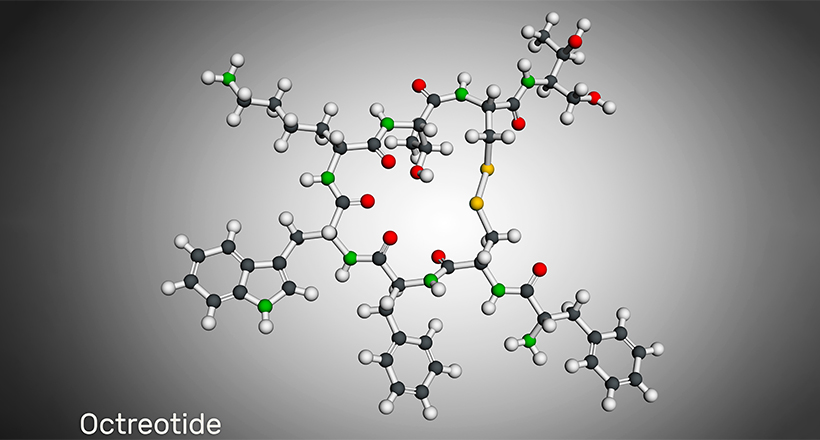
Some cyclic peptide drugs include Daptomycin, Telavancin, Dalbavancin, Lanreotide, Octreotide, Linaclotide, Plecanatide, Romidepsin, Vasopressin, Oxytocin, and Calcitonin. Many cyclic peptide drugs are from natural sources like cyclosporin A, Bactenecin, Lactocyclicin, and more. However, bio-engineered, synthetic cyclic peptide drugs are becoming common now.

How Do You Synthesize Cyclic Peptides?

The synthesis of Cyclic peptides involves Solid-Phase Peptide Synthesis (SPPS). In this method, peptide synthesis occurs linearly, immobilized on a resin bead with a disulfide linker or other chemically stable bonds such as lactone, ether, and thioether. After the linear peptide formation, possible protecting groups are cleaved, and the peptides are released by adding a base. Further, deprotonation of the N-terminal thiol group strikes the disulfide linker between the peptide and resin in intramolecular cyclization, giving the desired cyclic peptide.

Overall, synthesizing cyclic peptides requires careful control of protecting groups, coupling reagents, and reaction conditions to ensure high yields and purity.

Techniques for Synthesis of Cyclic Peptides

The preparation of cyclic peptide compounds uses various techniques: • combinatorial chemistry • de novo synthesis. • chemoselective ligation-mediated cyclization

Depending on the cyclization, the methods to synthesize cyclic peptides are head-to-tail, side-chain-to-side-chain, head-to-side-chain, and side-chain-to-tail. Cyclization of side chain amino acids occurs with disulfide bridge formation between cysteine. Further, backbone-to-backbone cyclization is by amide bond formation between N-terminal and C-terminal amino acid residues.

Moreover, there are other cyclic peptides like bicyclic/ tricyclic peptides and stapled cyclic peptides. Bicyclic peptides are effective enzyme inhibitors and stapled peptides facilitate peptide cell penetration and use cross-linkers to improve physiochemical properties.

Impurities in Cyclic Peptide Drugs

Impurities may arise from the synthesis of cyclic peptides. The API-related impurities are truncations, functional group modifications, insertion or deletion of amino acids, oxidations or reduction of functional groups, aggregates, and incomplete deprotection. Chromatographic media used in purification, and solvents also may contribute to impurity generation in cyclic peptide drugs. Degradation products occur due to changes in the drug product stored for a long time or exposure to light, temperature, water, or reaction to excipients. To ensure the safety and efficacy of cyclic peptide drugs, it is important to control and minimize impurities during the synthesis and purification processes.

General peptide impurities like N-Ac-impurity, de-amidation at Gln, Asn residues, deamidation at C-terminus, trisulfide impurity, Cyanoalanice @ Asn residue, des-Gly and endo-Gly of the terminus amino acids are common in cyclic peptides too. Degradation and other truncated peptides are also a major class of impurities in these cyclic peptides.

Apart from the above-described type of impurities, other impurities like Parallel and Anti-parallel dimers are often formed in cyclic peptides.

A) In the case of cyclic peptides containing a single disulfide bridge, the formation of parallel and antiparallel dimers are as below considering Vasopressin as an example:
  • Seq: Cys(1)-Tyr-Phe-Gln-Asn-Cys(6)-Pro-Arg-Gly-CONH2 (sulfur linkage between cysteines)
  • Parallel dimers: 1,1’, 6,6’
  • Anti-parallel dimers: 1,6’,1’,6
B) In the case of cyclic peptides containing two disulfide bridges, there are 4 sulfur-containing amino acids (cysteines) and the possible formation of parallel and anti-parallel dimers are as below considering Plecanatide as an example:
  • Seq: H-Asn-Asp-Glu-Cys(4)-Glu-Leu-Cys(7)-Val-Asn-Val-Ala-Cys(12)-Thr-Gly-Cys(15)-Leu-OH(4-12), (7-15)-bis(disulfide)
  • Parallel dimers: 4,4’, 7,7’, 12,12’, 15,15’;
  • Anti-parallel dimers:  4,7’,4’,7, 12,15’, 12’,15; or 4,12’,4’,12,7,15’,7’,15 or 4,15’,4’,15, 7,12’,7’,12
C) In the case of cyclic peptides containing three disulfide bridges, there are 6 sulfur-containing amino acids (cysteines) and the formation of dimer in parallel is one, but for anti-parallel dimers, there may be chances of permutations and combination of the cysteine positions one with another is very complex and isolation also a challenging. Linaclotide is such an example:
  • Seq: H-Cys(1)-Cys(2)-Glu-Tyr-Cys(5)-Cys(6)-Asn-Pro-Ala-Cys(10)-Thr-Gly-Cys(13)-Tyr-OH (3 disulfide bridges between 1-6, 2-10 and 5-13 of cysteines)

Conclusion

Daicel offers, a wide range of impurities of various cyclic peptide drugs containing single disulfide bridge such as Vasopressin, Oxytocin, Desmopressin, Calcitonin, Lanreotide, Octreotide, Somatostatin; containing two disulfide bridges like Plecanatide and three disulfide bridges like Linaclotide and other lipopeptide like Daptomycin, and more.
Please read our other blogs in the Peptide Synthesis series to learn more about peptide impurities.
Looking for peptide synthesis services or Pharma Impurities? Reach out to our Daicel specialists today! Just drop in your contact details and we will get back to you.
Peptide Synthesis: Importance of Impurity Profiling in Therapeutic Peptides

Peptide Synthesis: Importance of Impurity Profiling in Therapeutic Peptides

Therapeutic Peptides are a unique class of pharmaceutical drugs positioned in-between classical small-molecule drugs and large-molecule drugs. The peptide drug market is growing faster because of several inherent advantages concerning specificity, efficacy, safety, and the possibility of synthesizing by chemical and or biological methods. It is essential to study the impurity profile of a therapeutic peptide as impurities arise during any stage of peptide synthesis, either from the starting materials, manufacturing process, or during storage.

This blog is the first in its series and takes you through the importance of impurity profiling during the chemical synthesis of peptides.

Peptide Synthesis

Peptides consist of 2-50 amino acids linked by amide groups. Chemical synthesis allows the preparation of peptides outside a living cell. Synthetic peptide drug examples include hormones such as Oxytocin, Calcitonin, Liraglutide, Octreotide, etc.

Chemical peptide synthesis is by two methods

  • Solid-Phase Peptide Synthesis
  • Liquid-Phase Peptide Synthesis

Solid-Phase Peptide Synthesis

It is the most frequently used, efficient, and quick method of synthesis of peptides. Solid phase peptide synthesis (SPPS) involves a coupling reaction of amino acids consisting of protected side chain amino acid residues attached to insoluble polymeric support (resin).

The C-terminal of the initial amino acid is linked covalently to an insoluble polymeric support. After removal of the N(α)-protecting group of the last amino acid residue, N(α)-amino protected amino acids are introduced to the anchored amino acid. Subsequently, it involves a process of purification to remove the soluble by-products. The groups used for N(α)-amino acid protection are 9-fluorenylmethoxycarbonyl (Fmoc) or tert-butoxy carbonyl (boc). Repeating the deprotection and coupling cycle gives the desired peptide. The anchored product is cleaved from the polymer support, and the peptide releases into the solution.

SPPS prepares most peptides of 50 amino acid chains. Fully automated machines can prepare small quantities of peptides quickly. Further, microwave-assisted SPPS offers high-quality peptides.

Liquid-Phase Peptide Synthesis

Peptide synthesis occurring in solution is liquid-phase peptide synthesis. It usually utilizes Boc or Z-amino protecting groups. The final purification step in liquid-phase peptide synthesis is simpler than SPPS. Large-scale synthesis of peptides for shorter chains gives good yield by this method.

Impurities Formed During Peptide Synthesis

The possible impurities during the synthetic process of a therapeutic peptide include

  • Truncated amino acid sequences
  • Deletion sequences
  • Incomplete deprotection sequences
  • Modified sequence due to peptide cleavage
  • Amino-acid racemization

Impurities like peptide counter ions and trifluoroacetate arise from purification methods or SPPS. The side chain reactions of amino acids from Deamidation, oxidation, and hydrolysis reactions result in the formation of impurities. Further, peptide impurities can result in storage due to degradation mechanisms such as β-elimination and succinimide formation. Drug substance-excipient interactions also generate peptide-related impurities.

Purification of Peptides

Synthetic peptide purification is critical as impurities can affect a drug's therapeutic efficacy. The purification of synthetic peptides by Reversed-phase HPLC (RP-HPLC) and ion-exchange chromatography are common methodologies. Also, Gel permeation chromatography (GPC) and Supercritical fluid chromatography (SFC) are used as complementary techniques.

Control of Peptide Impurities

There are many techniques involved in the control of peptide impurities. High-Performance Liquid Chromatography (HPLC) separates and quantifies impurities. Liquid chromatography high-resolution mass spectroscopy (LC-HRMS) helps identify and elucidate structurally related peptide impurities. Regulatory agencies recommend an orthogonal approach using sensitive analytical techniques such as UHPLC-HRMS with the standard HPLC / UHPLC methods to establish the impurity profile of a peptide drug. Peptide-related impurities are critical, not only for active pharmaceutical ingredients (APIs) but also for finished drug products. According to the US-FDA guidelines, during ANDA submission for proposed generic synthetic peptides, the level of a peptide-related impurity in generic synthetic peptides should not be greater than the level found in RLD (Reference listed drug). The control of peptide impurities is vital to establish the safety and efficacy of a synthetic peptide drug.

Daicel offers various kinds of high-quality impurity standards of synthetic peptides and partners with peptide drug manufacturers across the globe. Our custom peptide synthesis team provides reliable solutions to complex peptide impurities and stable isotope-labeled peptides.

Daicel uses state-of-the-art automated SPPS, advanced purification, and analytical techniques during peptide synthesis, followed by the generation of a certificate of analysis from a cGMP-compliant quality control facility.

In addition, Daicel offers physicochemical characterization, cell-based bioassay development, process development, and tech transfer of therapeutic peptides.

Conclusion

Contamination of peptide drugs with impurities will impact the quality and efficacy of peptides and hence impurity profile studies are very important. Peptide impurities can introduce immunogenic epitopes within an amino acid sequence of a peptide and may result in undesired immune responses against the peptide drug. Hence, well-characterized impurity standards are necessary to judge the quality of peptide drugs. Daicel provides reliable custom peptide synthesis services to therapeutic peptide drug developers and manufacturers.

Please read our other blogs in the Peptide Synthesis series to learn more about peptide impurities.

If you are looking for peptide synthesis services, reach out to Daicel specialists today! Just drop in your contact details and we will get back to you.

Back to Top
Product has been added to your cart