
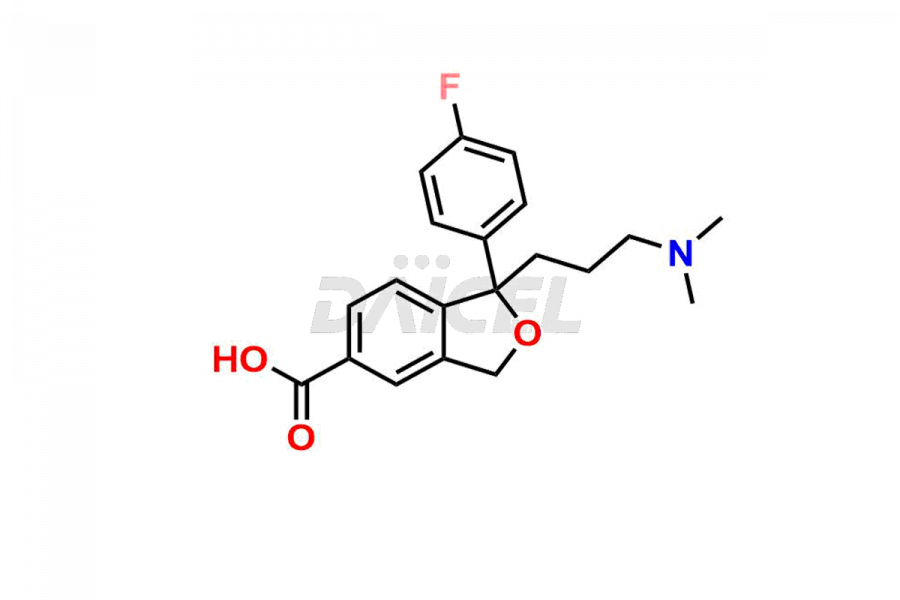

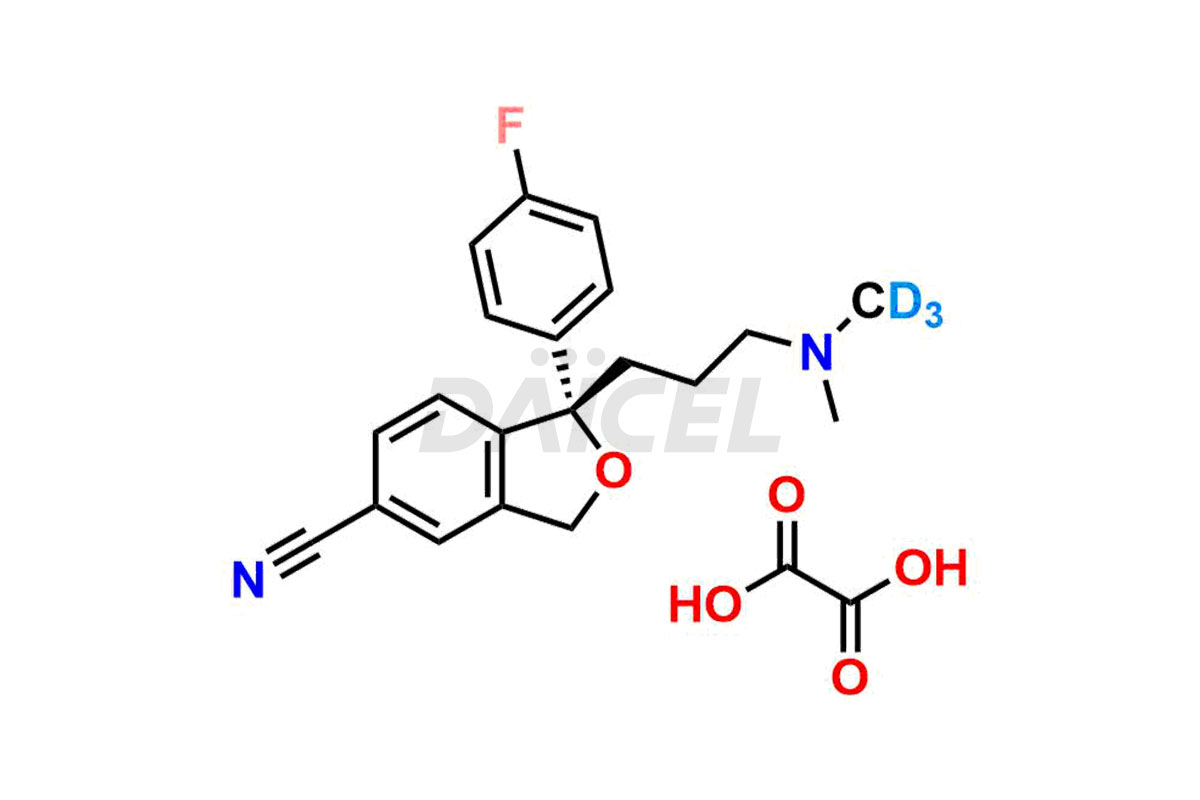
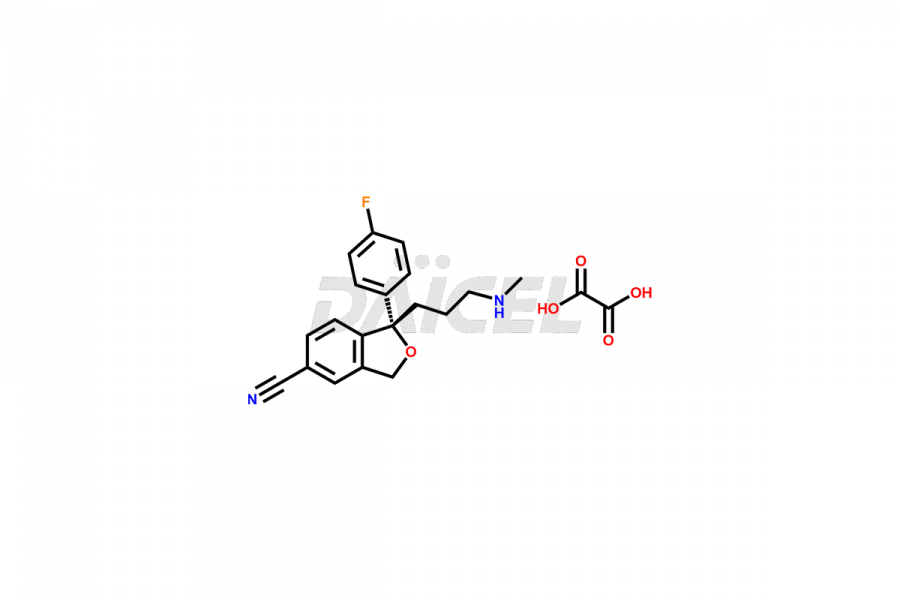
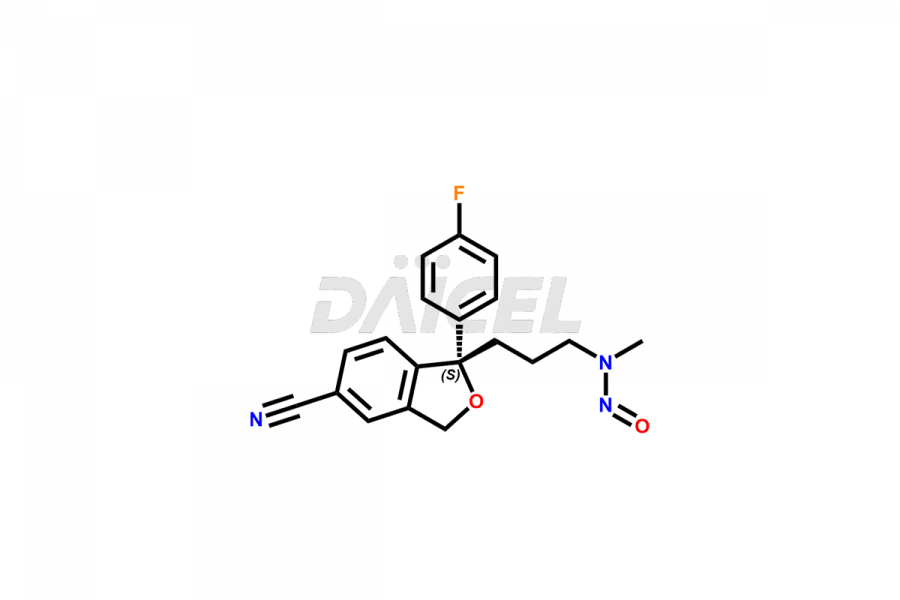
Daicel Pharma offers high-quality impurities for Escitalopram Oxalate, an active pharmaceutical ingredient. These impurities, including Escitalopram Acid Analog and Escitalopram Olefinic impurity, play a vital role in assessing the purity, reliability, and safety of Escitalopram Oxalate. Daicel Pharma also offers a customized synthesis of Escitalopram Oxalate impurities to cater to client requirements, with worldwide delivery options available.
Escitalopram [CAS: 128196-01-0] or Escitalopram oxalate [CAS: 219861-08-2] is an antidepressant medication that contains the oxalate salt of escitalopram. Escitalopram is the S-enantiomer of citalopram, a racemic bicyclic phthalane derivative. It belongs to selective serotonin reuptake inhibitors (SSRIs) and treats depression and generalized anxiety disorder.
Escitalopram Oxalate, or Lexapro, is a medication used to treat depression and panic disorder. It is the S-enantiomer of citalopram, a selective serotonin reuptake inhibitor. The drug treats major depressive disorder and generalized anxiety disorder in adults and adolescents.
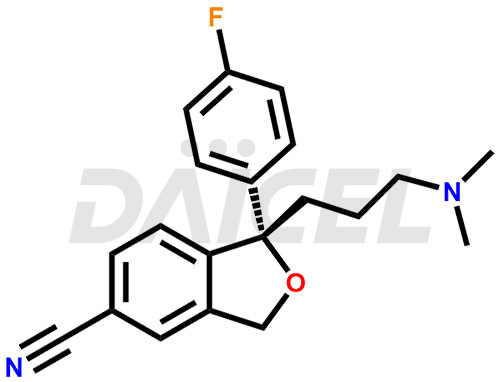
The chemical name of Escitalopram Oxalate is (+)-(S)-1-[3-(Dimethylamino)propyl]-1-(4-fluorophenyl)-1,3-dihydroisobenzofuran-5-carbonitrile oxalate. Its chemical formula is C22H23FN2O5, and its molecular weight is approximately 414.4 g/mol.
Escitalopram causes potentiation of serotonergic activity in the central nervous system due to its inhibition of CNS neuronal uptake of serotonin (5-HT).
The control, synthesis, and analysis of impurities in Escitalopram Oxalate are vital for ensuring the medication’s purity and safety. During Escitalopram synthesis1, understanding the potential pathways leading to impurity formation is crucial. Analytical techniques like high-performance liquid chromatography (HPLC) and mass spectrometry help detect and quantify these impurities. Stringent control measures during manufacturing minimize impurity generation and uphold the medication’s quality. Regular monitoring and adherence to regulatory guidelines ensure the effectiveness and safety of Escitalopram Oxalate for patients.
Daicel Pharma offers a comprehensive Certificate of Analysis (CoA) for Escitalopram Oxalate impurity standards, including Escitalopram Acid Analog and Escitalopram Olefinic impurity. They generate from an analytical facility that complies with cGMP standards. The CoA provides a detailed characterization report with data obtained through techniques such as 1H NMR, 13C NMR, IR, MASS, and HPLC purity analysis2. We give additional data like 13C-DEPT upon request. Daicel Pharma synthesizes unknown Escitalopram Oxalate impurities or degradation products. Moreover, the highly pure Escitalopram oxalate Labelled Standard, a deuterated-labeled Escitalopram Standard, is available for bioanalytical research and BA/BE studies. Every delivery has a complete characterization report.
Regulatory guidelines may provide specific requirements and limits for impurity control in different dosage forms of Escitalopram Oxalate to ensure consistent quality and safety across all formulations.
Impurities in Escitalopram Oxalate can originate from various sources such as starting materials, reagents, solvents, or intermediate degradation during the synthetic process.
Acetonitrile is the solvent for analyzing most of the impurities in Escitalopram Oxalate.
Escitalopram Oxalate impurities are stored at a controlled room temperature, between 2-8 ⁰C, or according to the specifications provided on the Certificate of Analysis (CoA).
Note: Products protected by valid patents by a manufacturer are not offered for sale in countries having patent protection. The sale of such products constitutes a patent infringement, and its liability is at the buyer's risk.